Step 4 · Data
Importers
Your history comes in from an export, straight from your current system, or from the reports you run today. A slow or costly export doesn't hold up the switch.
The switching toolkit
The hassle of switching is one of the biggest worries about a new LIMS, and a botched switch costs money and time. When the data can't be moved, or the move drags on, labs keep paying for the old system alongside the new one. In the records we studied, that overlap ran three to six years and cost $191,190 to $811,755 on top of the new system.
That's why SI LIMS comes with tools for the switch. Importers and mappers bring over your history, reports, and SOPs, and automated checks show you what doesn't match before you go live. Most vendors treat migration as a services project, billed by the hour. These tools are included in the subscription.
01 · The tools
Step 4 · Data
Your history comes in from an export, straight from your current system, or from the reports you run today. A slow or costly export doesn't hold up the switch.
Step 4 · Data
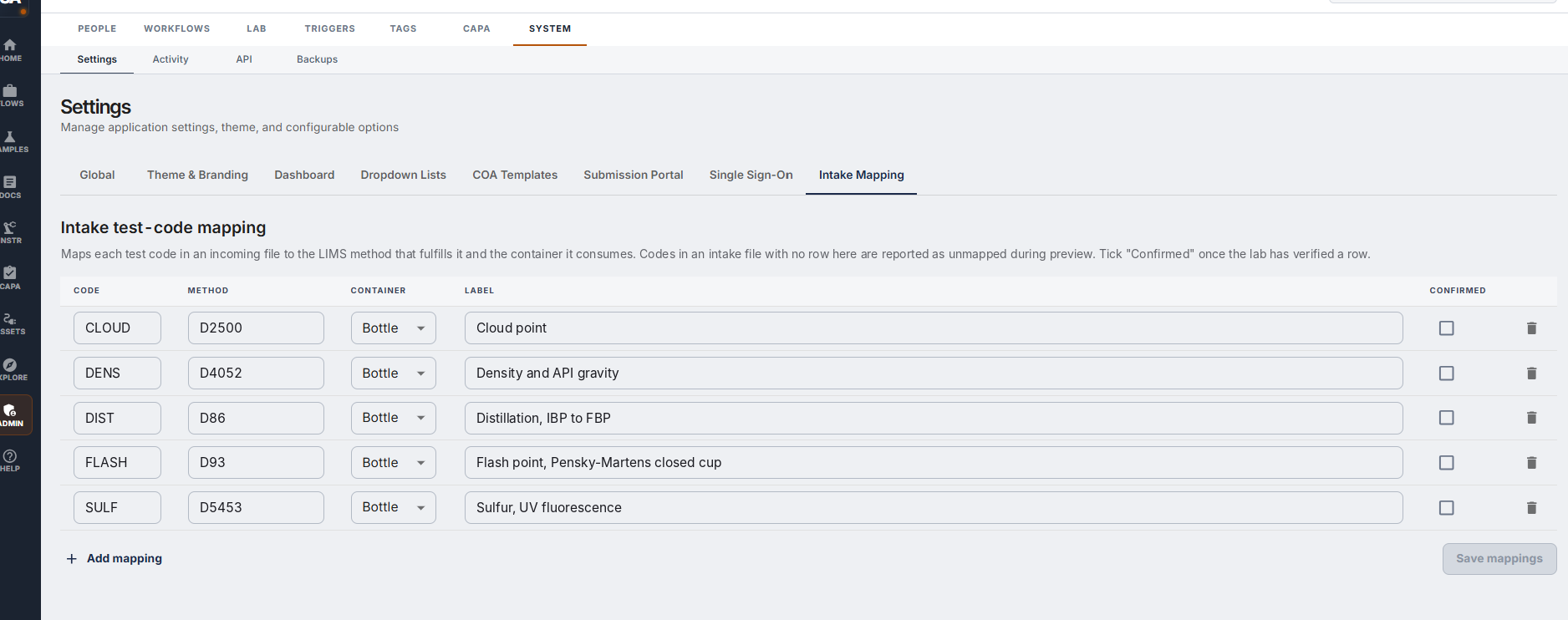
Fields in your files are mapped to fields in SI LIMS, and test codes to the methods that run them. If you want to keep your old field names, you can. Your analysts won't have to learn new ones.
Step 4 · Data
Files are previewed before they load. Codes without a mapping are reported, so nothing lands in the wrong place, and your lab confirms the mappings row by row.
Step 5 · Build
The reports and exports that go to operations, customers, and other systems come across too, in the format they're used to.
Step 4 · Data
Built from fifteen years working with data extracts from every major LIMS. They catch the problems that keep turning up: units that changed partway through the history, "clear and bright" in a numeric field, "<1" where a number should be, and retests that show up as extra results. Each one is flagged for the lab manager to decide.
Step 4 · Data
Puts your old system and SI LIMS next to each other and keeps open discrepancies on the list until they're cleared.
Step 5 · Build
Send your SOPs as PDFs or CSVs. Each one becomes a workflow, and the system reports when the LIMS matches the SOP. The ASTM methods you license are already loaded, so you're only adding your own steps and specs.
Step 7 · Parallel run
Through the parallel run, the system compares old and new every day and reports what matched and what didn't.
Step 3 · Decide
Finds the workarounds that have become part of the process, like results re-keyed into a spreadsheet to run a calculation, and shows where they can come out.
Plus planning worksheets for what to collect, who to involve, and what has to match before you switch.
Any time, you can build a report of the results you want and download it as a CSV in under a minute, without asking us. The same data is available through the API and any data-lake export you run. If you ever decide to leave SI LIMS, we'll help with the move.
The offer
Send us your current reports and an SOP. We'll bring them into SI LIMS with the switching toolkit and show them to you running there. About an hour of your time.
What the research shows
All four studies →Most named trouble getting data in and out, but what tipped the decision was technology going out of support, a compliance or accreditation requirement, or more samples than the staff could handle.
Why LIMS Get ReplacedThe license was 8 to 35 percent of what labs spent. Most medium and large labs also pay a full-time administrator $60,000 to $176,000 a year in salary, and upgrading a heavily customized system cost two labs more than $600,000 each.
What a LIMS Really CostsDocumented costs ran from a $7,000 fine to $1.2 billion. The further bad product traveled before someone acted, the more it cost.
What a Lab Data Error Costs17 of 20 approved requests named compliance, manual data handling, an unsupported system or security. None led with ease of use.
Getting a LIMS Approved02 · What a switch involves
Step 1
Analysts from every shift, the people who use your results, and IT, involved from week one.
Step 2
SOPs, methods, specs, instrument files, reports, and roles. Most of it already exists.
Step 3
The workflows you want, your warning signals, and your terms.
Step 4
Get your history out early. Map it, load it in stages, and check it against the source.
Step 5
Your SOPs become workflows. Your words become the dropdowns.
Step 6
By role and by shift, until everyone is comfortable.
Step 7
One day, then changes, then a full week. Switch when you're confident.
Step 8
Cut over on a quiet day, with extra support through the first weeks.
03 · The guide and the price
A guide for the lab manager making the case. Eight steps, with a checklist for each.
Your time
We'll work with your lab on a time estimate based on how complex your switch is.
What comes with you
Your methods, specs, terminology, reports, and as much history as you choose.
The switching toolkit
Importers, mappers and automated discrepancy checks built into SI LIMS bring all of that over and show you anything that doesn't match. It's included in the subscription.
What's in the price
One subscription includes CAPA, instrument management, SQC, competency tracking, implementation, training, and support. No change orders, no upgrade projects, nothing to install, and no extra staff to run it.
What's different after
Data in from the instrument, a photo, or a COA. Data out to CSV in under a minute. The lab changes its own configuration. Rules alert the right person before a problem becomes a finding.
04 · Making the case
The lab manager who recommends a switch is the one who answers for it. Here are the questions we would want answered before signing with any vendor, with our answers. For what gets the request approved, see our study Getting a LIMS Approved.
One subscription. Implementation, training, and support are included. Nothing you configure is a change order.
Imported with tools built into SI LIMS, from an export, the system itself, or your existing reports. Automated checks flag every discrepancy, and you sign off when they're cleared.
No. The switching toolkit is built into SI LIMS and included in the subscription.
By role and by shift, until each role is comfortable, plus a self-service library.
Extra support at the key transition points: the first data load, the parallel run, cutover, and the first weeks live.
SSO, MFA, role-based access, encryption, US data centers, and a 21 CFR Part 11 audit trail.
Yes. A validation package is available on request, and the parallel run can be documented as your performance qualification.
Our demos are led by industry insiders who understand your operation, not just the software. Tell us a little about your lab and we’ll tailor the conversation to what matters most.